Product Quality Guidelines Important Notes
Notes on Knots
- “Knots” Grade products may contain “dead knots”. Most sawmills do not remove “dead knots” as a standard practice.
- “No-knots” grades at most sawmills generally include few small knots and are not completely knot-free.
- “Few small knots” Grade typically refer to boards containing up to 1~5 knots of about 5 mm or less in diameter per piece; however, the exact criteria vary by sawmill.
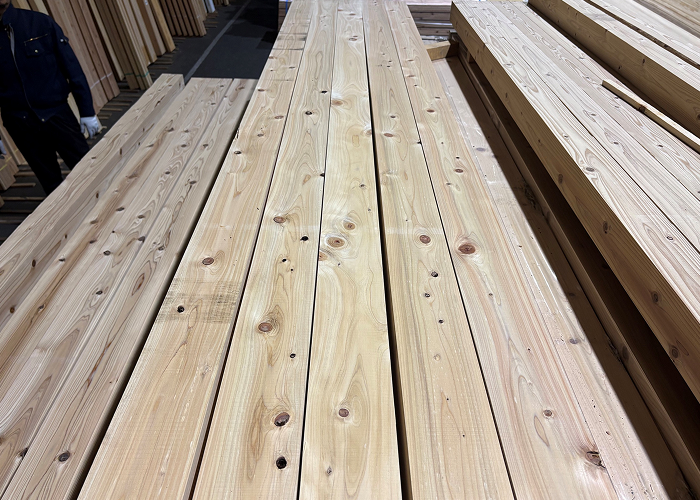 With Knots
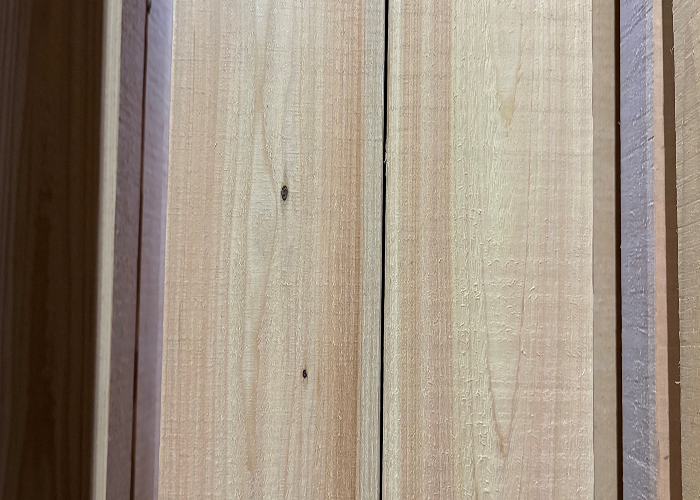 Small Knots / Knot-Free
Notes on Japanese Grades
-
Grades (A, B, C) are assigned according to Japanese sawmill standards.
A Grade: Suitable for construction for Japanese house without issues.
B Grade: Suitable for construction for Japanese house but may include minor defects such as cracks.
C Grade: Not suitable for construction; contains major defects.
-
※ Some sawmills may combine B and C grades.
※ Japanese grading standards are based primarily on structural usability, rather than on the number or size of knots.
Notes on Other Defects
- Cracks: End cracks may occur in green or air-dried lumber.The term “crack” refers to defects caused by drying that are severe enough to make the lumber unsuitable for construction use. End cracks are not included in this category.
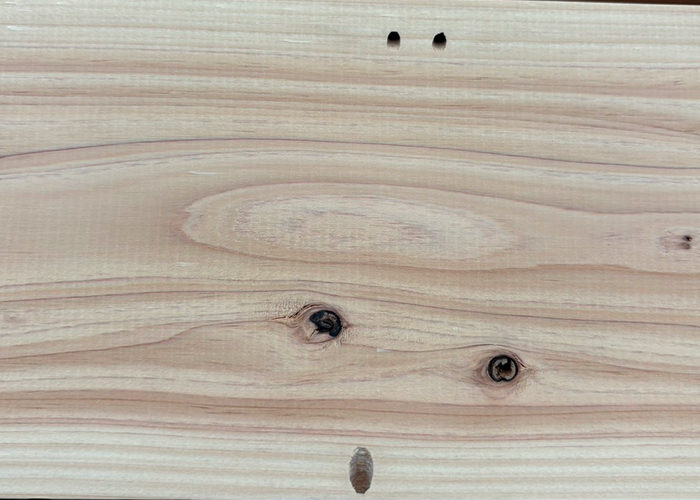 Insect Holes
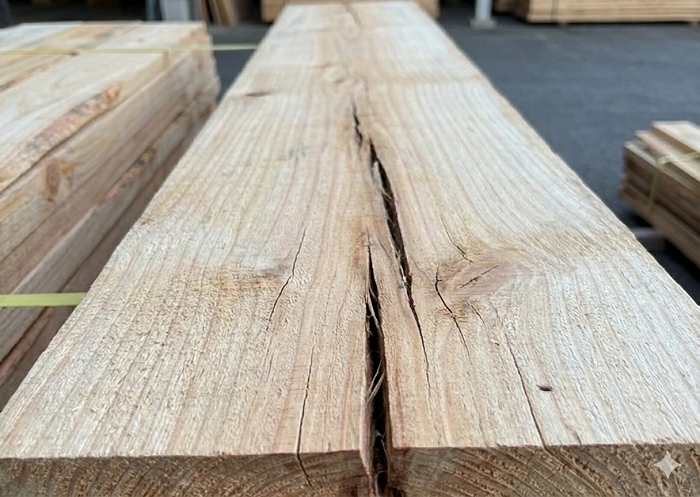 Cracks
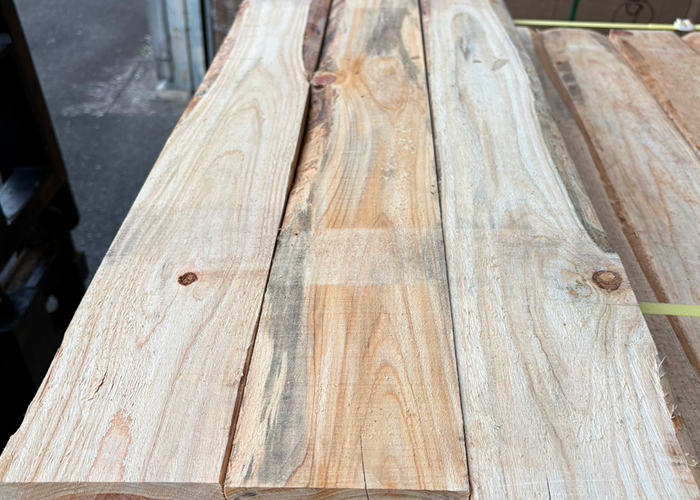 Blue Stain
Notes on Size
- Green lumber will shrink during the drying process, and the final dimensions may be slightly smaller than those indicated.
- Sizes are generally “true to dimension.” Please note that the lumber will not expand beyond the listed size.
Notes on Rounded
- Sizes are generally “true to dimension.” Please note that the lumber will not expand beyond the listed size.
- The degree of rounding is classified into three categories: “None,” “Slight,” and “Large.”
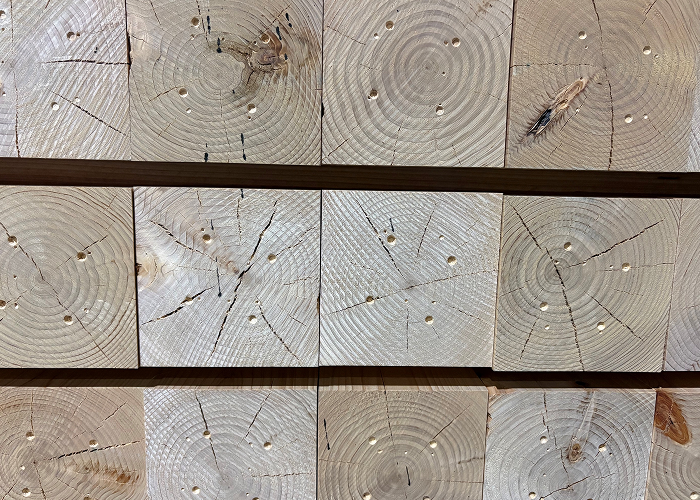 None
None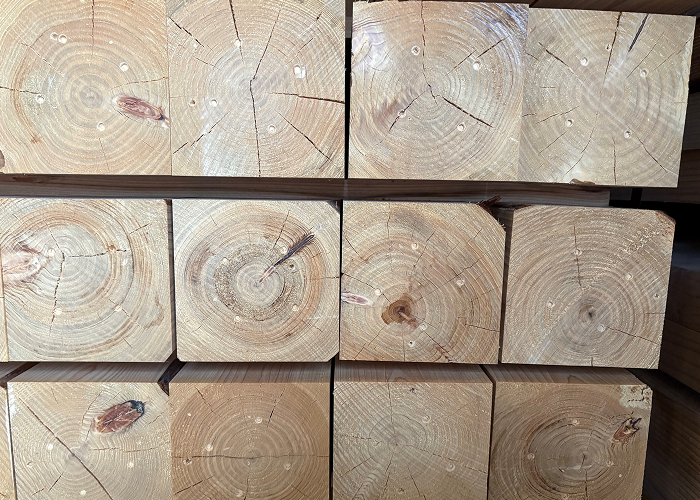 Slight
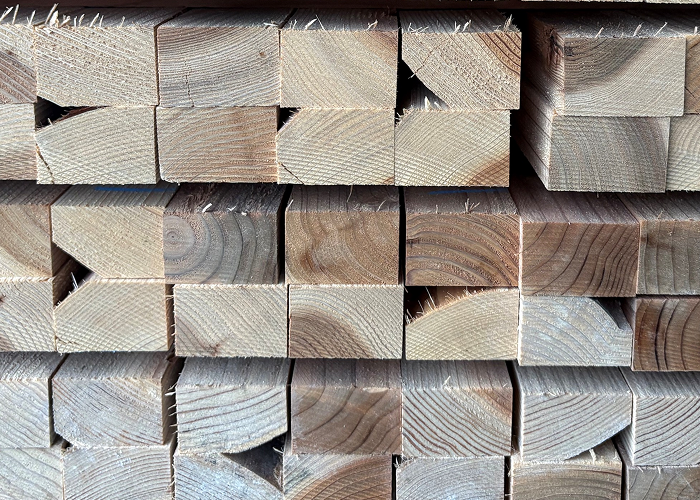 Large
LargeNotes on Drying
- Japanese KD (Kiln-Dried) lumber is produced to meet the moisture requirements suitable for domestic construction use.
- Typically, the moisture content is reduced to around 13%, after which the lumber may regain some moisture from the atmosphere.
- The purpose of drying is mainly to prevent warping and distortion. Unlike furniture-grade lumber, construction-grade KD lumber is not dried to a moisture content below 9%.
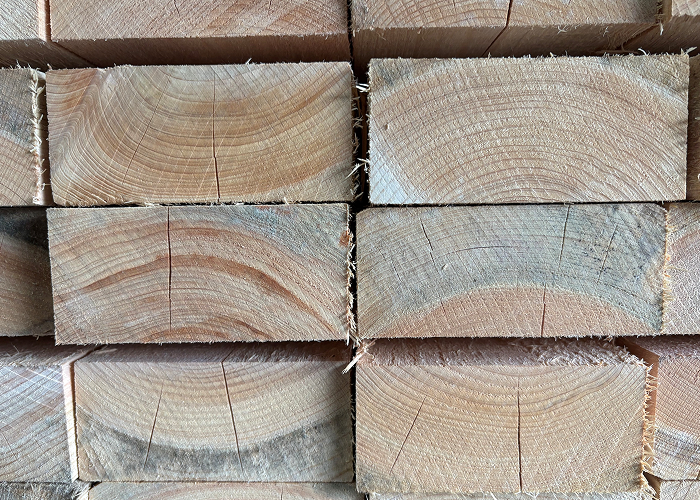 Blue Mold During Storage
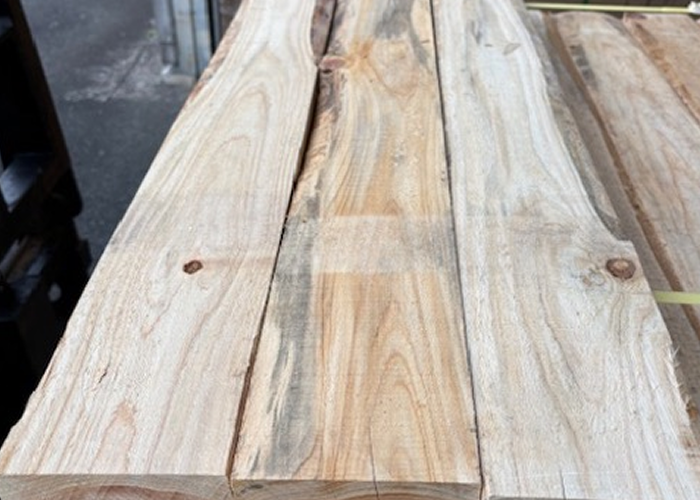 Surface
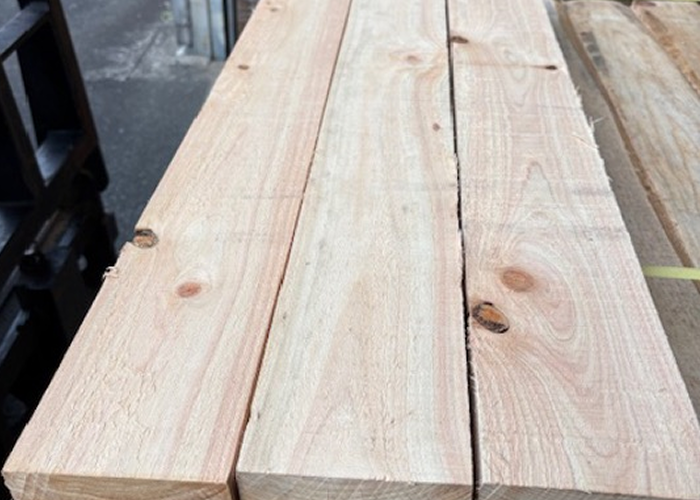 Back
Back- In green lumber, especially sapwood areas, mold may occur in any species, particularly when logs are harvested between May and August.
Revision Date: October 14, 2025
Operator: ALMOK Management Office
Official Website:
https://almok.jp